
Arm & thigh lift
These operations give tighter skin, but they leave a scar. Patients who understand and accept that before surgery are usually satisfied with the result.
What is an arm or thigh lift, and when is it needed instead of liposuction?
When the problem is loose skin that has lost its elasticity rather than fat. Liposuction cannot tighten skin; only removing the excess can.
The rule: If the problem is fat with elastic skin, liposuction may suffice and the skin will retract afterwards. If the problem is loose skin that has lost its elasticity — as happens after major weight loss or with age — then removing fat alone will only make the laxity more obvious.
This is assessed by direct examination and testing skin elasticity. Patients often ask for liposuction when the right recommendation is a lift, and it is better to make that clear before surgery.
Who is an arm or thigh lift for, and who needs another option?
It suits someone with loose skin of the arms or thighs — often after major weight loss or with age — at a stable weight, in good general health, who does not smoke and accepts a scar in exchange for tighter skin.
- Fat with elastic skin: liposuction alone may be enough.
- Weight still changing: better to wait until it is stable, because weight loss after surgery produces new laxity.
- Smoking: raises the risk of delayed wound healing; stopping before and after surgery is required.
- A tendency to thick or raised scars: discussed before deciding.
Where is the scar in an arm lift (brachioplasty)?
Along the inner arm, from the armpit towards the elbow, where it shows when the arm is raised.
Excess skin is removed from the inner aspect of the arm, with accompanying liposuction in many cases. The scar runs along the inner arm from the axilla towards the elbow, its length proportional to the amount of excess skin — the greater the laxity, the longer the scar. This is explained plainly before surgery.
In mild cases, a limited lift with a shorter scar confined to the axilla may be enough.
Where is the scar in a thigh lift?
Excess skin is removed from the inner thigh, with the scar placed either in the upper thigh crease (for limited cases) or extending downward towards the knee (for more extensive laxity).
This region is more demanding in recovery than most: constant movement, friction and proximity to areas difficult to keep dry make wound care harder and the likelihood of healing problems comparatively higher. Adherence to instructions here makes a real difference to the outcome.
How long is recovery after an arm or thigh lift?
Most people return to desk work in about two weeks; the scars take twelve to eighteen months to mature. Lymphatic massage is recommended from about two weeks after surgery, together with the recovery protocol, to help the swelling settle and give a faster, better result.
- First days: swelling and restricted movement of the treated limb.
- Return to desk work: commonly around two weeks.
- Compression garment: worn for about six weeks as instructed.
- Exercise: resumed gradually four to six weeks after surgery.
- Scar maturation: twelve to eighteen months, requiring care and sun protection.
- Physical work: a gradual return between four and six weeks after surgery.
- Driving: depending on pain and ease of movement; usually about two weeks after surgery.
- Air travel: stay for at least two weeks after surgery so the wounds can be checked, the stitches removed and clots guarded against; after that, travel is possible with the necessary precautions.
Follow-up after arm & thigh lift
You are seen one to two times during the first week, three to four times during the first month, then every two to three months until six months. Certain cases are followed annually thereafter. Missing these visits can delay the recognition of a complication.
Possible risks and complications of arm & thigh lift
Possible risks and complications include: scar widening or the development of hypertrophic or keloid scarring, delayed healing or partial wound separation (more common in the thighs), fluid collection, infection, altered sensation, temporary or persistent lymphoedema, asymmetry between sides, the possibility of later revision, and anaesthetic risks.
Questions about arm & thigh lift
Can the scar be avoided?
Not in cases with genuine skin laxity. Scar position can be controlled and length minimised as far as the amount of skin allows, but removing excess skin necessarily means suturing, and suturing means a scar.
How long after weight loss can it be done?
After the weight has been stable for long enough, because continued loss afterwards can produce new laxity. The appropriate interval depends on your case and your weight trajectory.
Can arms and thighs be done in one operation?
Sometimes, depending on general health and anaesthetic time, but the decision is made on safety grounds first, bearing in mind that recovering from two sites simultaneously is harder on the patient.
Ask about this procedure
Send your enquiry on WhatsApp and a member of the team will reply during working hours to arrange a suitable appointment.
Ask on WhatsAppRelated procedures
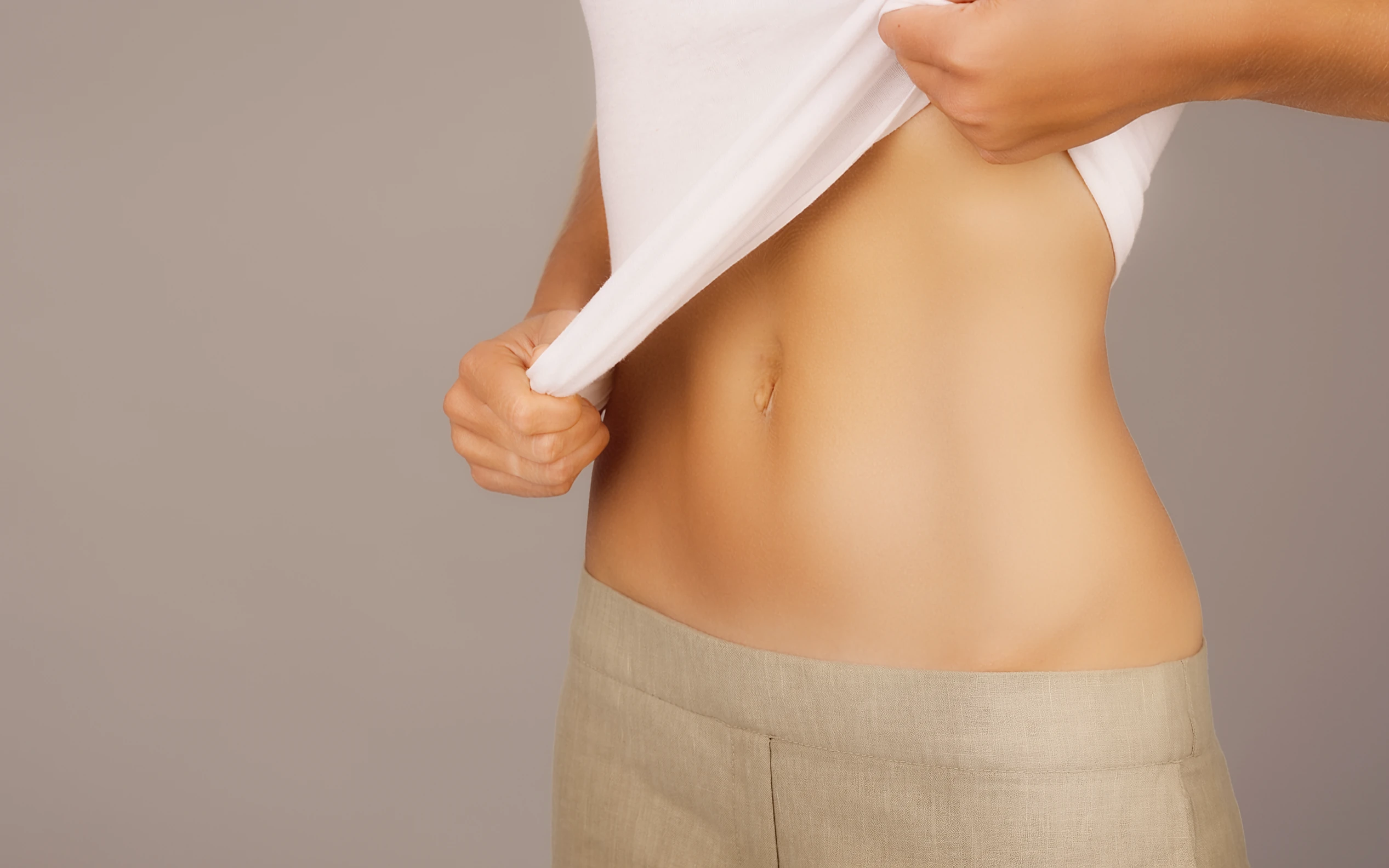
Liposuction & body contouring
Reshaping the body's contour by removing stubborn fat from defined areas, and where suitable, revealing the natural muscle definition beneath (4D body contouring).
Read more
Abdominoplasty (tummy tuck)
Addressing loose skin and separated abdominal muscles that exercise cannot correct, most often after pregnancy or weight loss.
Read more
Autologous fat grafting
Using the body's own fat to restore lost volume or improve the quality of specific areas, with living tissue from the patient.
Read more