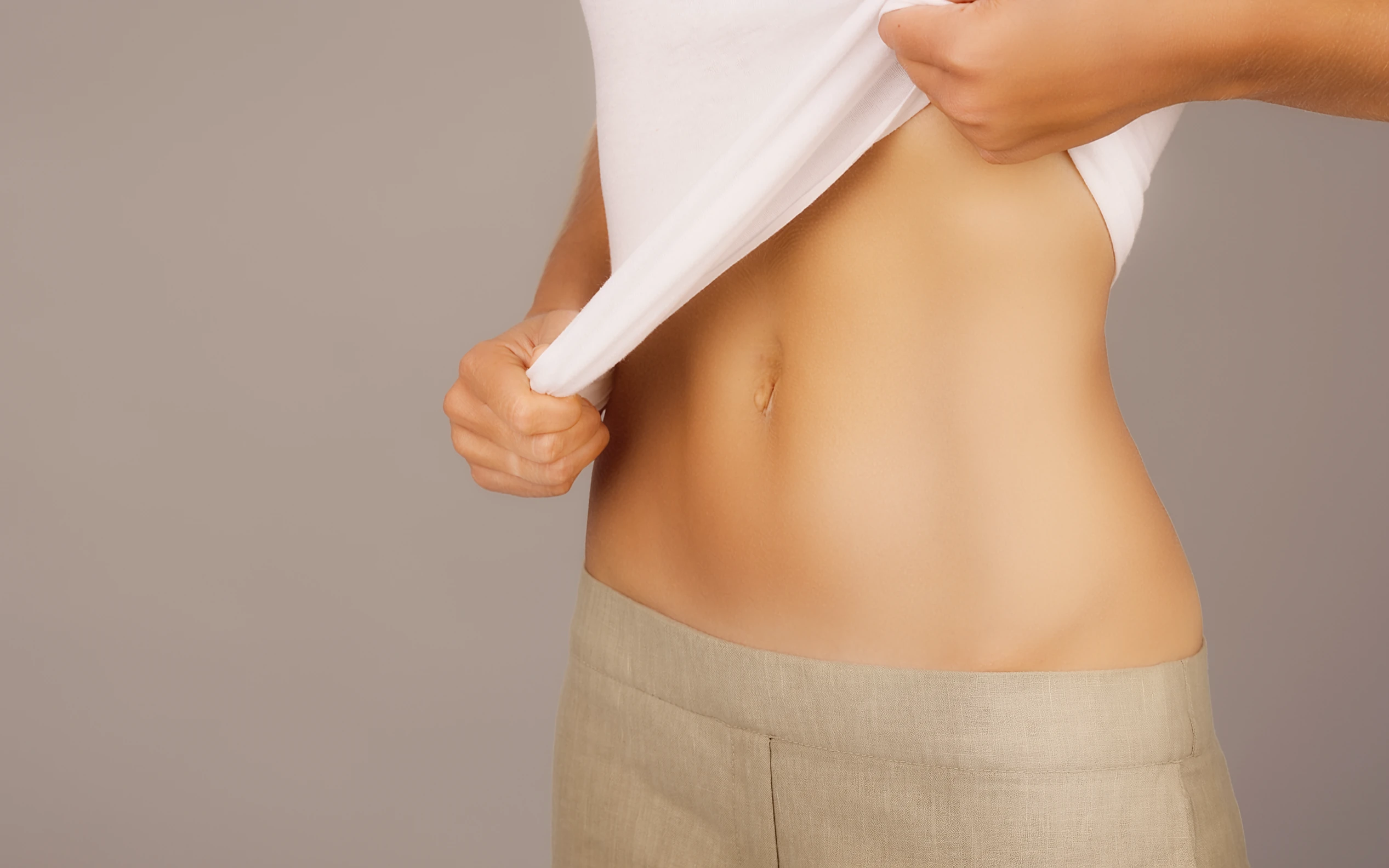
Liposuction & body contouring
Liposuction is a procedure that reshapes the body's contour, not a weight-loss method. That difference is what decides whether someone is a suitable candidate.
What is liposuction, and what can it not do?
Liposuction is a surgical procedure in which part of the fat layer sitting beneath the skin is removed through very small openings, in order to alter the shape and contour of an area. "Sculpting" — or what is marketed as four-dimensional contouring — is a more refined application of the same idea: selective removal of fat at different depths to reveal the athletic lines of the underlying muscle. It can be performed to varying degrees — mild, moderate, or high-definition etching that gives a strongly athletic muscular outline.
It is equally important to be clear about what it cannot do. It does not treat obesity, it does not remove visceral fat surrounding the organs inside the abdomen, it does not tighten loose skin, and it is no substitute for diet or exercise. For anyone a long way from their target weight, the correct starting point is weight loss, not surgery.
Who is liposuction for, and who needs another option?
Someone close to a stable weight, with good skin elasticity and localised fat that has not responded to diet and exercise. Someone a long way from their target weight, or whose skin is loose, usually is not.
A suitable candidate usually meets all of the following:
- A weight close to stable, with localised fatty areas that do not respond to diet and exercise.
- Good skin elasticity — the most important factor and the most frequently overlooked. Skin with poor elasticity can look worse once the fat filling it is removed.
- Good general health, without poorly controlled medical conditions.
- Realistic expectations, and an understanding that the result appears gradually rather than immediately.
Careful assessment is needed for: a pregnancy planned in the near future, active smoking, clotting disorders, and previous surgery in the same area.
How is liposuction planned?
Planning begins with examining you standing, because fat distribution and skin behaviour differ entirely between standing and lying down. Target areas are mapped, skin elasticity is assessed by direct examination, and a decision is reached as to whether the case needs simple contouring, finer sculpting, or a different procedure altogether such as abdominoplasty.
Often the answer is that liposuction alone will not be enough. Where that is so, it is said clearly before surgery rather than after — because performing liposuction on a case that needs excision produces a disappointing result no matter how good the technique.
Where are the liposuction openings?
Small openings of no more than a few millimetres each, placed in nearly hidden spots: in natural creases, inside the navel, or within the underwear area.
The openings are slightly dark for the first months, then fade until they are barely visible within several months. They may stay a little more visible in darker skin or in people prone to raised scars.
How long is recovery after liposuction?
Most people return to desk work after about a week to ten days; the final contour takes three to six months, and up to a year for the last of the swelling. Lymphatic massage is recommended straight after liposuction, from the first day, together with the recovery protocol, to help the swelling settle and give a faster, better result.
Timeframes vary with the size of the areas treated and the nature of your work, but the general shape of it:
- First days: swelling, bruising, tightness and discomfort controlled with prescribed analgesia. Light movement is required early.
- Return to desk work: commonly around one week to ten days.
- Compression garment: worn for about six weeks as instructed. Its role in controlling swelling and shaping the tissue is central — adherence is not a minor detail.
- Exercise: resumed gradually three to four weeks after surgery.
- Final result: typically three to six months, and up to a year for the last of the swelling to settle.
- Physical work: a gradual return between three and four weeks after surgery.
- Driving: depending on pain and ease of movement; usually about one week after surgery.
- Air travel: stay for at least one week after surgery so the wounds can be checked and the stitches removed; after that, travel is possible with the necessary precautions.
Judging the shape at two or three weeks is judging swelling, not a result.
Follow-up after liposuction & body contouring
You are seen one to two times during the first week, three to four times during the first month, then every two to three months until six months. Certain cases are followed annually thereafter. Missing these visits can delay the recognition of a complication.
Possible risks and complications of liposuction & body contouring
As with any surgical procedure, liposuction carries possible risks and complications, including: bleeding and haematoma, fluid collection (seroma), infection, contour irregularity or asymmetry, temporary or permanent changes in sensation, delayed wound healing, anaesthetic risks, and rarely venous or fat thrombosis. A proportion of cases may also require a subsequent revision procedure.
These are discussed in detail, together with those that apply to your case specifically, during the consultation and before any decision is taken.
Questions about liposuction & body contouring
Does the fat come back?
Fat cells that are removed do not return, but the cells remaining elsewhere in the body can enlarge if you gain weight. The result holds while your weight holds, and is compromised if it rises.
What is the difference between conventional liposuction and 4D sculpting?
The objective differs. Conventional liposuction reduces volume and refines the contour broadly, whereas sculpting works at different depths of the fat layer to reveal anatomical lines. The latter demands a more specific candidate — lower body fat and better skin elasticity — and does not suit every case.
Can it be combined with another operation?
Sometimes, if general health and anaesthetic time allow. Combining procedures is decided on safety grounds first, not on saving time.
Ask about this procedure
Send your enquiry on WhatsApp and a member of the team will reply during working hours to arrange a suitable appointment.
Ask on WhatsAppRelated procedures

Abdominoplasty (tummy tuck)
Addressing loose skin and separated abdominal muscles that exercise cannot correct, most often after pregnancy or weight loss.
Read more
Autologous fat grafting
Using the body's own fat to restore lost volume or improve the quality of specific areas, with living tissue from the patient.
Read more
Arm & thigh lift
Addressing loose skin of the arms or thighs where liposuction alone is not enough.
Read more