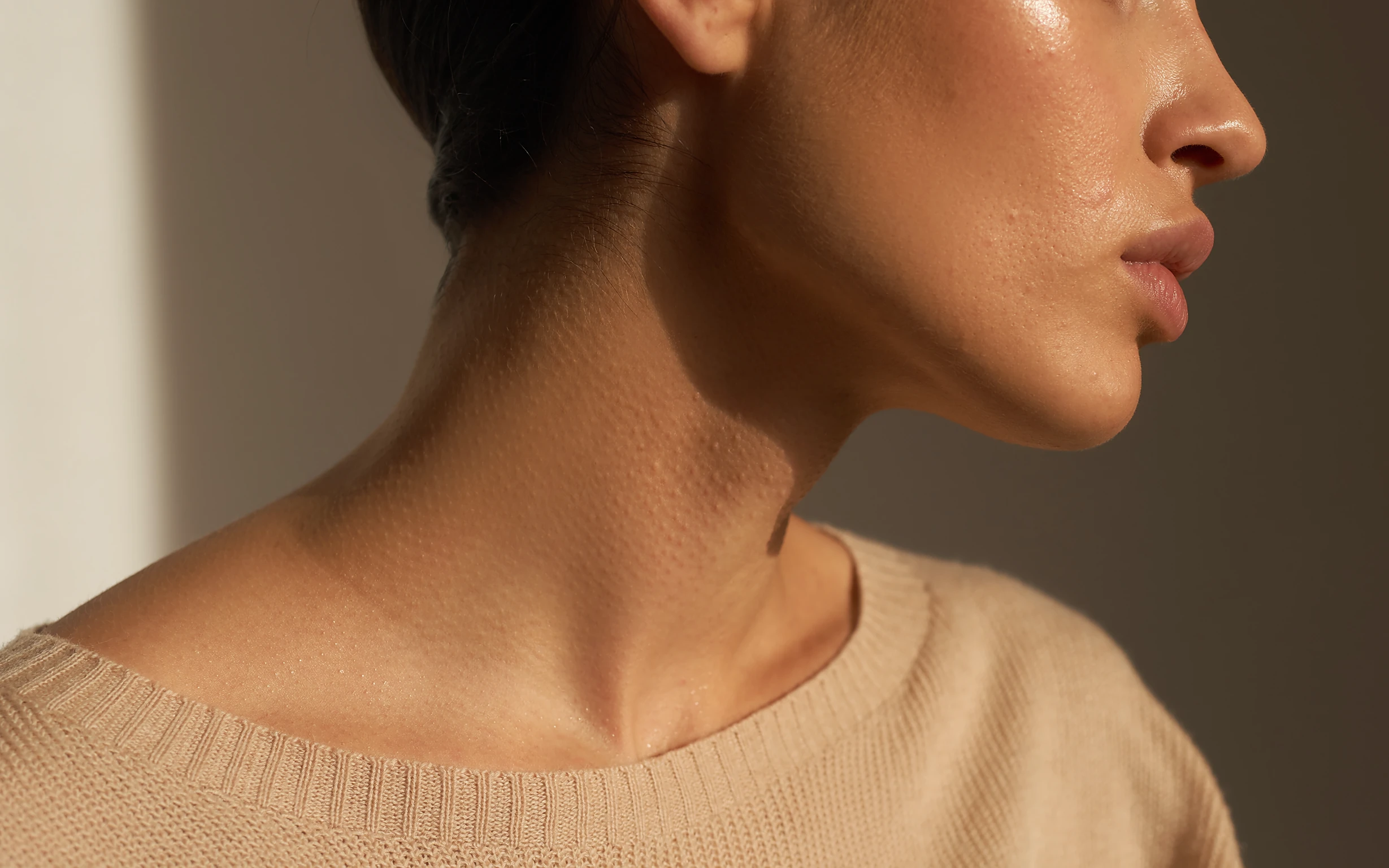
Microneedling
Microneedling improves the skin's surface by stimulating it to repair itself. The results build over several sessions, not after one.
What does microneedling do?
Microneedling uses a device with very fine needles to create thousands of tiny, controlled channels in the skin, triggering a healing response that produces new collagen and elastin.
Over a course of treatments it can improve skin texture, fine lines, enlarged pores and acne scarring. It is sometimes combined with PRP or other topical treatments applied during the session. Microneedling with radiofrequency (Morpheus) adds heat for deeper tightening.
Who is microneedling suitable for — and who should avoid it?
Adults seeking gradual improvement in skin texture, scars or fine lines without surgery.
- Active acne, infection or cold sores: treated first.
- A tendency to keloid scars: assessed carefully.
- Recent isotretinoin use: treatment is usually deferred.
- Pregnancy: deferred.
What does a microneedling session involve?
After numbing cream, the device is passed over the skin for about twenty to forty minutes; there are no incisions and no scars.
Needle depth is adjusted to the area and the problem — shallower on thin skin, deeper on scars.
How long is recovery after microneedling?
The skin is red, like mild sunburn, for one to three days. Results build over the following months, usually after a course of three to six sessions about four weeks apart.
- First days: gentle cleansing, moisturiser and sun protection; no makeup for the first day.
- Active skincare: retinoids and acids paused for a few days.
Possible risks and complications of microneedling
Possible side effects include: redness, swelling, bruising, temporary dryness or flaking, breakouts, infection, and pigmentation changes — more likely in darker skin and with sun exposure afterwards.
Questions about microneedling
How many microneedling sessions will I need?
Usually a course of three to six sessions about four weeks apart, then maintenance as needed.
Can microneedling treat acne scars?
It can improve many acne scars, especially rolling scars, over a course of treatment. Deep icepick scars often need additional treatments.
Ask about this procedure
Send your enquiry on WhatsApp and a member of the team will reply during working hours to arrange a suitable appointment.
Ask on WhatsAppRelated procedures
Facial rejuvenation
A tailored combination of non-surgical treatments — skin quality, volume and muscle movement — planned for the face as a whole.
Read more
PRP — face
Platelet-rich plasma from the patient's own blood, injected into the face to support skin quality — often combined with microneedling.
Read more
PRP — hair
Injecting platelet-rich plasma from the patient's own blood into the scalp to support thinning hair.
Read more